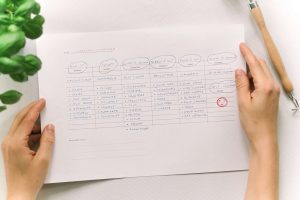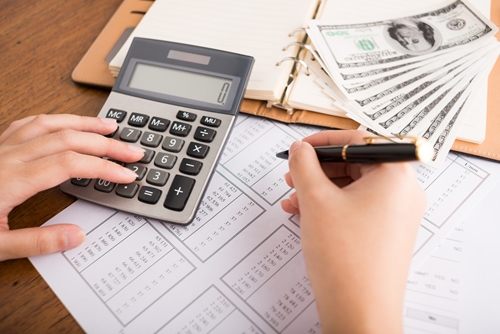
Managing household finances frequently becomes overwhelming not because families lack money, but because their tracking systems are overly complex. Many people attempt to build massive spreadsheets with dozens of micro-categories, tracking every pack of gum or afternoon coffee. Within three weeks, the administrative burden becomes exhausting, tracking lapses, and the household defaults back to financial guesswork.
A functional household budget is not an exercise in deprivation or endless receipt bookkeeping. It is simply an intentional spending plan designed to ensure your recurring obligations are met, essential needs are funded, and unexpected spikes do not derail your peace of mind.
Here is a practical, sustainable framework to set up a simple household budget focused squarely on your regular expenses.
1. Establish Your Reliable Net Income Baseline
A realistic budget must be built on actual cash in hand rather than theoretical gross earnings. Before allocating funds to bills or groceries, calculate your true monthly net baseline.
Calculate Take-Home Pay
Base your calculations strictly on your net income—the amount deposited into your bank account after income taxes, retirement contributions, and healthcare premiums are deducted.
-
Fixed Salaried Income: Use your steady monthly take-home total.
-
Bi-Weekly Paychecks (26 Pay Periods): If you are paid every two weeks, base your monthly plan on two paychecks per month (24 checks per year). Treat the two “extra” paychecks that occur during the year as periodic reserves for debt reduction, sinking funds, or savings rather than relying on them for routine monthly living costs.
-
Variable or Freelance Income: Average your lowest three earning months from the prior calendar year to establish a conservative baseline. Budgeting against an average or high month leaves you vulnerable during lean seasons.
2. Categorize Expenses: Fixed, Variable, and Sinking Funds
The key to keeping a household budget simple is avoiding granular sub-categories. Group all regular expenses into three operational buckets:
+---------------------+---------------------------------------------------+-----------------------------+
| Expense Bucket      | Examples of Line Items                            | Payment Characteristic      |
+---------------------+---------------------------------------------------+-----------------------------+
| 1. Fixed Essentials | Rent/mortgage, trash service, auto insurance,     | Predictable amount, exact   |
|                     | internet, fixed loan payments                     | due dates                   |
+---------------------+---------------------------------------------------+-----------------------------+
| 2. Variable Needs   | Groceries, electricity, natural gas, gasoline,    | Fluctuating amount, regular |
|                     | household cleaning consumables                    | monthly necessity           |
+---------------------+---------------------------------------------------+-----------------------------+
| 3. Sinking Funds    | Annual car registration, quarterly water bills,   | Irregular timing,           |
| (Periodic Reserves) | seasonal HVAC servicing, basic home maintenance   | predictable obligation      |
+---------------------+---------------------------------------------------+-----------------------------+
Clarify Fixed Essentials
These are the non-negotiables required to keep a roof over your head, transit operational, and accounts in good standing. Because these amounts rarely change from month to month, they form the rigid foundation of your spending plan.
Stabilize Variable Essentials
Variable essentials like groceries and utility bills fluctuate, which often causes budget anxiety. Review your bank statements from the previous three to six months to establish a realistic average. If summer electric bills run $220 while winter bills run $110, contact your utility provider to inquire about levelized or balanced billing, which averages your payments across twelve equal installments.
Account for Sinking Funds
Budgets frequently break because people treat periodic expenses as “emergencies.” An annual car tag renewal or a quarterly water bill is not an emergency; it is a regular expense on an extended timeline. Total your known non-monthly bills for the year, divide that sum by twelve, and set that amount aside each month in a separate checking or savings sub-account.
3. Choose a Simple Allocation Framework
Once you have documented your numbers, organize them using a recognizable, balanced framework. While rigid ratios do not fit every income level or high-cost-of-living area, the traditional 50/30/20 guideline provides a helpful diagnostic starting point:
-
50% for Needs: Housing, essential food, utilities, minimum debt service, and basic transportation.
-
30% for Wants: Dining out, entertainment, streaming subscriptions, and hobby purchases.
-
20% for Savings and Extra Debt Reduction: Emergency fund reserves, sinking fund contributions, and accelerated debt payoff.
If your fixed essentials consume 65% of your income due to housing costs, adjust the baseline proportionally (e.g., 65% Needs, 20% Wants, 15% Savings). The goal is not perfection; it is clarity and preventing total expenses from exceeding 100% of income.
4. Practical Implementation Steps
A budget on paper is useless if it does not interact with your daily bank account mechanics.
Step 1: Align Due Dates with Income
Review when your major fixed bills fall during the month. If rent and car insurance both process on the 1st, your first paycheck may feel depleted while the second carries excess funds. Call service providers (such as cell phone carriers, auto lenders, and utility companies) and request that they adjust your billing cycles so expenses distribute evenly across pay cycles.
Step 2: Implement the “Two-Account” Banking System
To stop accidentally spending bill money on daily conveniences, split your cash flow across two distinct checking accounts:
-
Account A (Fixed Household Bills): Direct deposit your income here. Automatically draw all fixed bills, rent/mortgage, utilities, and debt payments from this account. Do not carry a debit card for Account A.
-
Account B (Variable Spending & Day-to-Day): Set up a recurring bi-weekly or monthly automated transfer from Account A to Account B for discretionary spending and groceries. Use your Account B debit card for daily living. When Account B is low, variable spending naturally halts until the next transfer, without putting bill payments at risk.
Step 3: Conduct a Weekly 10-Minute Financial Check-In
Do not wait for the end of the month to review your finances. Pick one consistent day—such as Sunday morning or Thursday evening—to spend ten minutes checking Account B balances, reviewing upcoming bills for the week ahead, and confirming that automatic transfers cleared properly.
5. Common Budgeting Mistakes to Avoid
-
Relying on Best-Case Projections: If you regularly spend $700 a month on groceries, do not write $450 into your new budget based on pure optimism. Artificially low caps lead to immediate budget failure. Start with your true spending baseline and trim gradually by 5% to 10% through meal planning and bulk shopping.
-
Treating Miscellaneous Cash Spending as Invisible: Cash withdrawals and peer-to-peer mobile app transfers add up quickly. Treat digital wallet balances as real cash withdrawals and assign them to explicit categories.
-
Abandoning the Budget After One Overspend: Overspending in one category is normal. If vehicle repairs consume your dining-out fund this month, adjust the category and move forward rather than discarding your entire system.
Frequently Asked Questions
What is the simplest tool for a beginner to track a household budget?
A basic lined notebook or a simple digital spreadsheet with four columns (Date, Category, Planned Amount, Actual Spent) is the best starting point. Avoiding complex third-party budgeting software initially allows you to grasp your cash-flow mechanics manually without dealing with sync errors or software learning curves.
How do I handle expenses that vary wildly, like groceries?
Separate essential staples from discretionary dining out. Set a firm weekly grocery allocation rather than a monthly total. For example, if your grocery budget is $600 per month, treat it as $150 per week. Weekly limits are much easier to pace and track than managing a single large monthly pool.
How large should an initial emergency fund be before budgeting for extra goals?
Financial education standards typically suggest building a starter emergency cushion of $1,000 or one month of baseline fixed living expenses. Once high-interest consumer debt is managed, work toward expanding that reserve to cover three to six months of essential living costs.
Should couples manage joint accounts or separate budgets?
Both structures can succeed. Many households find success with a hybrid model: a shared joint account dedicated to shared fixed expenses (rent, utilities, groceries, joint sinking funds) funded proportionally by both partners, alongside individual personal accounts for personal discretionary spending.