Most household food waste does not begin in the kitchen trash can; it begins days earlier in the supermarket aisles. We walk through produce sections with aspirational goals, tossing bundles of greens, delicate herbs, and family packs of protein into our carts without checking whether our upcoming weekly schedule actually leaves time to cook them.
By mid-week, unexpected late meetings, takeout cravings, and forgotten perishables turn those good intentions into limp celery, moldy berries, and expired meats. According to findings highlighted by university extension services and public environmental agencies, household food waste accounts for substantial financial losses each year, with perishable produce and dairy consistently topping the list.
Drafting an effective grocery list is not just about writing down items you feel like eating. A list designed to curb waste acts as a precise filter: it accounts for existing ingredients, aligns with your actual calendar, and enforces realistic portion boundaries.
1. The Pre-List Kitchen Audit (Shop Your Kitchen First)
The most expensive mistake in grocery shopping is building a list while looking only at recipe photos rather than your existing inventory. Writing a waste-reducing list starts with a mandatory ten-minute check of three household zones.
+--------------------+---------------------------------------+------------------------------------------+
| Audit Zone         | Primary Target                        | Action Before Writing the List           |
+--------------------+---------------------------------------+------------------------------------------+
| Refrigerator       | Unopened dairy, open condiments,      | Identify "Eat-First" perishables; build  |
| & Crisper Bins     | greens, partial cuts of vegetables    | early-week meals around these items      |
+--------------------+---------------------------------------+------------------------------------------+
| Freezer            | Forgotten cuts of protein, partial    | Choose one or two frozen items to thaw   |
|                    | bags of frozen vegetables, breads     | for main meals before buying fresh meats |
+--------------------+---------------------------------------+------------------------------------------+
| Dry Pantry         | Opened grains, canned tomatoes,       | Select base carbs and legumes that need  |
|                    | dried beans, past-purchase sauces     | pairing with fresh produce               |
+--------------------+---------------------------------------+------------------------------------------+
Establish an “Eat-First” Shelf
Before writing a single item, look closely at your crisper drawers. Note vegetables with softening skins, opened cheeses, or herbs nearing their prime. Write these items down at the very top of your draft page under the heading “Must Use Within 48 Hours.” Every meal plan—and every subsequent shopping item—must anchor around consuming these goods first.
Check for Near-Duplicates
Check your pantry for half-used bags of basmati rice, redundant cans of crushed tomatoes, or duplicate mustard jars before adding them to your list. Studies show that over a third of shoppers routinely buy duplicates simply because they failed to check their shelves before leaving home.
2. Match Your List to Your Real Calendar, Not Your Ideal Week
Standard meal planning assumes seven consecutive nights of home-cooked, multi-step dinners. In reality, a realistic household week includes late workdays, invitations to dine out, tired evenings, and leftovers.
The “N minus Two” Rule
If you are planning for a seven-day week, never plan or shop for seven distinct dinners.
-
Plan for 4 to 5 Home-Cooked Meals Maximum: Leave at least two nights intentionally unassigned.
-
Night 1 of Unassigned Time: A dedicated “Leftovers Night” to sweep up roasted meats, curries, or skillet bases before they hit the USDA four-day storage limit.
-
Night 2 of Unassigned Time: A buffer for casual meals (scrambled eggs and toast, pantry soup) or unplanned takeout.
Purchasing ingredients for all seven nights guarantees that at least two meals’ worth of perishable produce will spoil in your refrigerator before the week concludes.
3. How to Structure Your Grocery List to Prevent Overbuying
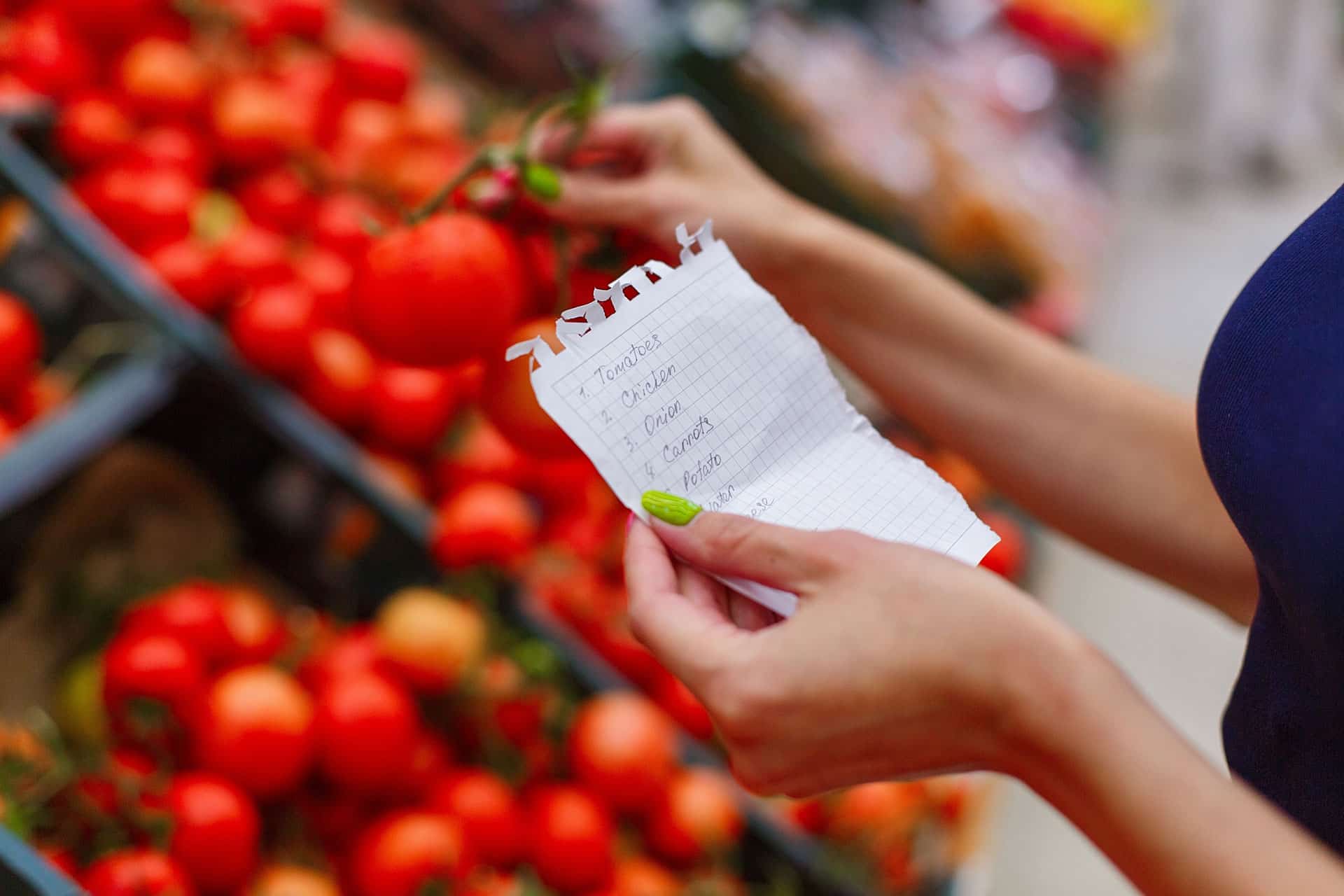
A simple, disorganized list jotted down on a scrap of paper invites impulse buying. To keep your cart aligned with your actual needs, structure your shopping list using three strict editorial rules:
+--------------------+---------------------------------------+------------------------------------------+
| List Section       | Item Examples                         | Buying Rule to Prevent Waste             |
+--------------------+---------------------------------------+------------------------------------------+
| 1. High-Perishable | Salad greens, berries, fresh fish,    | Buy strictly by meal-count; consume in   |
|    Produce & Meats | fresh herbs, mushrooms                | days 1–3 of your week                    |
+--------------------+---------------------------------------+------------------------------------------+
| 2. Long-Storage    | Carrots, cabbage, potatoes, onions,   | Safe for days 4–7; resists rapid         |
|    Fresh Goods     | apples, citrus fruits, winter squash  | spoiling if midweek plans shift          |
+--------------------+---------------------------------------+------------------------------------------+
| 3. Connective      | Lemons, block cheese, plain yogurt,   | Fill specific functional gaps needed to  |
|    Pantry & Dairy  | broths, whole-grain tortillas         | link pantry staples together             |
+--------------------+---------------------------------------+------------------------------------------+
Rule 1: Specify Quantities, Not Just Item Names
Never write vague entries like “apples,” “onions,” or “chicken.” Ambiguity invites impulse estimation in the store aisle.
-
Vague Entry (High Waste): “Carrots” $\rightarrow$ You buy a two-pound plastic bag, use two stalks for soup, and the rest rots.
-
Quantified Entry (Low Waste): “Carrots (3 stalks)” $\rightarrow$ You buy three loose carrots from the bulk display bin.
-
Vague Entry: “Zucchini” $\rightarrow$ Quantified Entry: “Zucchini (2 medium, for Tuesday skillet roast).”
Rule 2: Sequence Produce by Shelf-Life Longevity
Balance delicate, short-lived greens with sturdy vegetables that can comfortably wait on the shelf:
-
Early-Week Produce: Spinach, arugula, raspberries, fresh fish, and delicate soft herbs spoil within two to three days. Schedule these meals for Monday and Tuesday.
-
Late-Week Produce: Whole heads of cabbage, carrots, broccoli, and sweet potatoes easily maintain cellular firmness for seven to ten days. Assigning these to Thursday and Friday protects your budget if an early-week dinner gets postponed.
Rule 3: Beware the Bulk-Buying Trap
Bulk warehouse clubs offer appealing unit-cost discounts on five-pound bags of lemons, multi-packs of avocados, or giant clamshells of salad greens. However, a bulk deal only saves money if every ounce is consumed. Calculate the true cost: paying $4 for a single head of lettuce you finish completely is cheaper than paying $6 for a triple-pack where two heads turn into brown liquid and end up in the compost bin.
4. In-Store Tactics: Sticking to the Plan
Once you step through the grocery store sliding doors, marketing layouts are designed to stimulate unplanned purchases. Protect your list using practical in-store boundaries:
-
Shop from the Middle Outwards (Reverse Routing): Most shoppers walk straight into the perimeter produce section first, loading their carts with delicate greens while hungry. If you plan meals around pantry bases, shop your dry shelf-stable grains, canned beans, and frozen goods first. By the time you reach the produce aisle, your cart is substantial, helping you evaluate fresh purchases more conservatively.
-
Embrace Frozen Produce for Fillers: Frozen vegetables (such as green peas, cut green beans, sweet corn, and chopped spinach) are harvested at peak ripeness and flash-frozen. They allow you to pour out the exact cup needed for a weeknight skillet meal while resealing the rest, producing zero prep scraps and zero spoilage.
-
Inspect Packaging and Date Labels: Check produce containers for trapped condensation, crushed berries, or bruised skins. For dairy and meats, look beyond the front display packages to check “Sell By” or “Use By” stamps, selecting dates that comfortably match your planned cooking night.
5. Food Safety and Safe Repurposing Guidelines
Planning a shopping list around waste reduction also requires following core food safety boundaries:
-
Understand Date Labels: The USDA Food Safety and Inspection Service clarifies that “Best if Used By” and “Sell By” labels reflect peak product quality, not safety. Do not preemptively discard unexpired shelf-stable food simply because a “Best By” date is approaching. Conversely, foods with visible mold, off-putting odors, or foul slime must be discarded.
-
The Two-Hour Window: Never leave purchased raw meats, dairy, or prepared cut produce unrefrigerated in a warm vehicle or on kitchen counters for longer than two hours (or one hour if temperatures exceed 90°F / 32°C). Unpack groceries immediately upon returning home.
-
Respect the Four-Day Leftovers Rule: Meals scheduled around leftover proteins and cooked vegetables must be eaten within three to four days of initial preparation. If your weekly plan leaves extra cooked food past four days, portion it into freezer bags and freeze it immediately.
Frequently Asked Questions
What should I do if a recipe calls for half an onion or a single celery stalk?
Avoid buying specialty items for single recipe steps without planning their counterpart. If a recipe needs half an onion, chop the remaining half and store it in an airtight container for the next morning’s eggs, or plan a soup base later in the week that consumes the rest of the celery stalk bundle. Alternatively, look for recipes with flexible ingredient profiles that absorb the whole vegetable.
Is buying loose produce more expensive than pre-bagged produce?
While pre-bagged produce (like three-pound bags of apples or two-pound bags of onions) often has a slightly lower price per pound, buying loose produce is almost always cheaper in total out-of-pocket spending if the bagged volume exceeds your household consumption. Buying exactly three loose onions for $1.80 saves money compared to buying a two-pound mesh bag for $3.00 if half the bag sprouts and is discarded.
How do I stop impulse buying snack foods when shopping with children?
Involve family members in drafting the list before leaving home. Assign each person one specific, agreed-upon snack or produce choice to write onto the list. When walking the aisles, maintain a firm “if it is not on the paper, we do not put it in the cart” rule to keep expectations clear and consistent.
Can I plan a zero-waste grocery list if my schedule changes frequently?
Yes. If your week involves unpredictable work hours, shift your fresh list toward resilient produce (cabbage, carrots, potatoes, citrus) and rely heavily on shelf-stable pantry bases (rice, pasta, canned beans) and frozen proteins. If your dinners get postponed by client dinners or travel, resilient and frozen ingredients remain perfectly preserved for the following week.