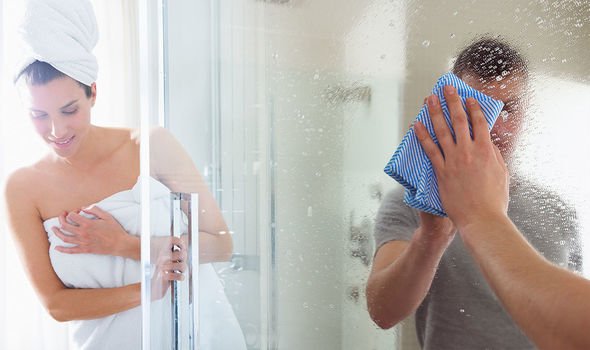
Few everyday inconveniences are as persistent as stepping out of a warm shower only to find the bathroom mirror completely obscured by thick condensation. The typical reaction—wiping the surface with a hand or a damp bath towel—clears the glass for mere seconds while leaving behind unsightly streaks, lint, and water spots that remain visible once the room dries out.
Mirror fogging is simple physics: warm, moisture-saturated air from the shower encounters the relatively cold glass surface. The air chills immediately upon contact, dropping below its dew point and causing airborne water vapor to condense into millions of microscopic water droplets that scatter light.
Stopping fog from forming comes down to two reliable approaches: treating the glass surface with a temporary surfactant barrier or managing the moisture level in the room. Here is a practical breakdown of the best solutions, ranging from quick household treatments to permanent hardware upgrades.
1. Quick Household Barrier Treatments
Surfactants work by reducing the surface tension of water. Instead of condensing into millions of tiny, light-scattering beads, moisture forms a continuous, ultra-thin sheet of water that remains optically clear.
+---------------------+-------------------------+----------------------+---------------------------------+
| Method              | Application Ease        | Typical Duration     | Key Advantage / Trade-off       |
+---------------------+-------------------------+----------------------+---------------------------------+
| Shaving Cream       | Very simple             | 1 to 2 weeks         | Highly effective; leaves no     |
| (Traditional Foam)  |                         |                      | streaks if buffed dry           |
+---------------------+-------------------------+----------------------+---------------------------------+
| Bar Soap            | Simple                  | 1 to 2 weeks         | Free and readily available;     |
|                     |                         |                      | requires firm buffing to clear  |
+---------------------+-------------------------+----------------------+---------------------------------+
| Diluted Dish Soap   | Simple                  | 1 week               | Leaves zero haze; requires      |
|                     |                         |                      | strict dilution to avoid smear  |
+---------------------+-------------------------+----------------------+---------------------------------+
| Commercial Anti-Fog | Fast spray              | 2 to 4 weeks         | Formulated specifically for     |
| Spray               |                         |                      | optics; higher upfront cost     |
+---------------------+-------------------------+----------------------+---------------------------------+
The Shaving Cream Method (Most Reliable)
Standard, foaming white shaving cream (not moisturizing gel) is one of the most effective household defoggers because it contains light glycerin and surfactant compounds that leave a clear protective barrier.
-
Squirt a quarter-sized amount of standard foaming shaving cream onto a clean, dry microfiber cloth.
-
Wipe the shaving cream across the clean mirror in circular motions until the glass is lightly coated.
-
Take a second, completely dry, clean microfiber cloth and vigorously buff the mirror until all streaks and residue disappear and the glass is completely clear.
-
Verification: Take a warm shower. The treated mirror surface will remain entirely reflective while surrounding tiles fog over.
The Gentle Bar Soap Method
A dry bar of mild hand soap or dish soap works well if shaving cream is not on hand:
-
Lightly draw crosshatch patterns or light streaks across the dry glass with a dry bar of soap. Keep the application very light; you do not need thick coverage.
-
Immediately take a clean, slightly damp microfiber cloth to distribute the soap evenly.
-
Follow with a clean, dry microfiber cloth and buff thoroughly until the hazy film is completely polished away.
2. Improving Room Airflow and Ventilation
Surface coatings treat the symptom, but proper ventilation targets the moisture itself, protecting your walls, ceiling paint, and fixtures from long-term mold and mildew damage.
Run Exhaust Fans Correctly
Many people turn their bathroom exhaust fan on when entering the shower and switch it off the moment the water stops. This traps the peak volume of airborne humidity inside the room.
-
Turn the fan on 2 to 3 minutes before turning on the water. This establishes a positive air-draw pattern before humidity levels spike.
-
Leave the fan running for 15 to 20 minutes after completing the shower. This exhausts lingering vapor before it settles onto walls and mirrors.
-
If your fan lacks an automatic timer switch, consider installing a simple countdown wall timer or a digital humidity-sensing switch that turns the fan on and off automatically based on room moisture levels.
Check Fan Airflow Efficiency
Over time, bathroom exhaust grilles accumulate dense mats of lint and dust that severely restrict airflow.
-
Gently pull down the plastic exhaust fan cover, pinch the wire retention springs, and remove the grille.
-
Vacuum the dust from the blades and wash the plastic grille with warm, soapy water.
-
Test suction: Hold a single square of toilet paper against the operating fan grille. The fan should hold the paper firmly in place against gravity. If it falls, the motor is failing or the exterior duct flap is obstructed.
Optimize Natural Drafts
If your bathroom lacks an exhaust fan:
-
Crack the bathroom door 1 to 2 inches during the shower, provided household privacy allows it, to let moist air escape into the broader home.
-
Crack an exterior bathroom window half an inch to create a cross-breeze.
-
Run a small desktop personal fan on low on the counter or floor, pointed diagonally toward the open door or window to push humid air out.
3. Long-Term and Permanent Hardware Solutions
If you are renovating, replacing a vanity, or tired of reapplying surface coatings, mechanical solutions eliminate fog completely without ongoing maintenance.
Install an Electric Mirror Demister Pad
Demister pads (also called heating pads) are thin, flat heating films installed behind the mirror glass, wired directly into the bathroom lighting or fan circuit.
-
How they work: The pad gently warms the mirror glass to a few degrees above room temperature (typically around 85°F to 100°F / 30°C to 38°C).
-
Because the glass is warmer than the humid air around it, moisture cannot condense on the surface.
-
Demister pads consume minimal electricity (comparable to a low-wattage light bulb) and require zero maintenance once mounted.
Modern LED Mirrors with Built-in Defoggers
Many contemporary wall-mounted bathroom mirrors come pre-assembled with integrated LED perimeter lighting and a built-in defogger pad operated by an independent touch sensor on the glass. Pressing the defogger button 5 minutes before showering ensures clear glass from start to finish.
4. Practices to Avoid
-
Never use vinegar as an anti-fog treatment: While diluted white vinegar is an excellent natural glass cleaner for dissolving hard water scale, it possesses no surfactant properties. In fact, stripping all oils and residues with acid often causes water droplets to bead up more aggressively.
-
Do not wipe fogged mirrors with bath towels: Terrycloth bath towels shed fine lint and transfer skin oils or soap residue onto the glass, leaving behind greasy smears that make subsequent fogging worse and require full chemical cleaning to remove.
-
Avoid aggressive chemical cleaners on anti-fog coated glass: If you purchase a mirror with a factory-applied anti-fog film, clean it exclusively with warm water and soft microfiber cloths. Ammonia- or alcohol-based glass sprays will degrade the chemical film.
Frequently Asked Questions
How long does a shaving cream application last on a bathroom mirror?
A single light application of shaving cream typically keeps a mirror fog-free for one to two weeks, depending on how frequently the bathroom is used and how much moisture is generated. When condensation begins returning around the outer edges of the glass, simply wipe the mirror clean and reapply.
Why does my hair dryer clear a fogged mirror so fast?
A hair dryer blows hot air directly onto the glass, quickly raising the temperature of the mirror above the dew point of the surrounding air and causing the microscopic water droplets to evaporate instantly. While this is a quick temporary fix, it does not prevent the glass from re-fogging if the room remains humid.
Can cold water keep a mirror from fogging?
Splashing cold water onto a mirror does not prevent fogging; it cools the glass further, which actually accelerates condensation. The goal is always to keep the glass warmer than the room air or to lower the water’s surface tension using a surfactant.
Will an anti-fog treatment damage the silver backing of my mirror?
No, as long as you apply it strictly to the front glass surface. Mirror backing (the silvering) is damaged when excessive moisture, pooled cleaner, or steam seeps behind the edges of the frame over time, which causes “mirror rot” (black spots around the margins). Avoid spraying liquid cleaners directly along the mirror’s bottom edge.