Walking into a room that smells persistently damp, stale, or earthy is an immediate sign that something in the environment is off. Many people attempt to mask the odor with aerosol air fresheners, scented candles, or plug-in diffusers. However, covering up the smell only hides the warning sign.
That distinct “musty” odor is not just stale air; it is the physical off-gassing of microbial volatile organic compounds (MVOCs) released as mold, mildew, or bacterial colonies digest organic material in the presence of moisture. Sprays cannot neutralize MVOCs because the underlying colony continues to grow as long as moisture is present.
Locating and eliminating the smell requires a methodical approach: tracking moisture sources, inspecting hidden cavities, cleaning contaminated surfaces safely, and correcting the airflow or humidity conditions that allowed the problem to start.
1. Where Does the Smell Come From? Diagnostic Checklist
Before opening walls or discarding rugs, isolate the exact location and conditions under which the odor is strongest. The timing and intensity of the smell provide clear clues to its origin.
+-----------------------------------+---------------------------------------------+----------------------------------------------+
| Odor Pattern                      | Most Probable Source                        | Immediate Inspection Point                   |
+-----------------------------------+---------------------------------------------+----------------------------------------------+
| Hits hardest when HVAC kicks on   | AC evaporator coil, condensate drain line,  | Air handler drip pan, filter slot, supply    |
|                                   | or duct lining contamination                | plenum registers                             |
+-----------------------------------+---------------------------------------------+----------------------------------------------+
| Concentrated near floor or corners| Damp subfloor, wet carpet backing, or slow  | Under area rugs, baseboard edges, crawl space|
|                                   | foundation moisture intrusion               | or slab perimeter                            |
+-----------------------------------+---------------------------------------------+----------------------------------------------+
| Strongest inside enclosed storage | Trapped humidity, unventilated fabrics,     | Wardrobes, dresser drawers, closet back walls|
|                                   | or moisture against cold exterior walls     | touching outside foundation                  |
+-----------------------------------+---------------------------------------------+----------------------------------------------+
| Localized near plumbing fixtures  | Slow drain leak, degraded wax ring, or      | Under-sink vanity base, escutcheon plates,   |
|                                   | dry plumbing P-trap releasing sewer air     | shower pan grout seams                       |
+-----------------------------------+---------------------------------------------+----------------------------------------------+
The 48-Hour Containment Test
If the smell seems diffuse and fills the entire room, identify whether the odor comes from the room’s building envelope (walls, floor, window frames) or movable contents (books, upholstery, rugs, stored boxes):
-
Remove all porous items—including area rugs, throw pillows, heavy curtains, and stored cardboard boxes—and relocate them to a dry, well-ventilated garage or open porch.
-
Keep the room closed for 24 hours with the windows shut.
-
If the room smells neutral upon re-entry, the structural surfaces are fine; the odor was held in the porous fabrics or cardboard. If the odor remains strong, the source is within the flooring, walls, window trims, or mechanical systems.
2. Common Hidden Sources and How to Inspect Them
Mold requires three elements to thrive: spores (present everywhere indoors), an organic food source (wood, drywall paper, cotton, dust), and moisture. Because darkness accelerates growth, the source is rarely in plain sight.
1. Behind Heavy Furniture on Exterior Walls
Exterior walls have lower surface temperatures during cool months. When large dressers, bookcases, or headboards are pushed flush against an exterior wall, airflow stops. Warm, humid room air drifts behind the furniture, hits the cold drywall, condenses into moisture, and feeds surface mildew on the wall and the back of the wood furniture.
-
Inspection: Pull furniture at least 4 to 6 inches away from the wall. Check the back panel of the furniture and the baseboard for black, gray, or velvety white discoloration.
2. Under Carpets and Padding
Carpet fibers dry relatively quickly after a spill, pet accident, or window leak, but the dense foam padding and wood subfloor beneath can stay saturated for weeks.
-
Inspection: Pull back a corner of the carpet near the perimeter of the room using pliers. Inspect the tack strip and backing. Dark staining, rusted tack strip nails, or crumbly padding confirm trapped moisture beneath the surface.
3. Window Sills and Wall Tracks
Condensation running down cold windowpanes routinely pools on the wooden sill or slips down into the drywall joint under the trim.
-
Inspection: Check the lower corners of the window frame. Press firmly on the wood or drywall directly beneath the sill. If it feels soft, spongy, or leaves an indentation, water has penetrated the wall assembly.
4. HVAC Condensate Pans and Air Ducts
Central air conditioners dehumidify the air as they cool, funneling gallons of water into a collection pan connected to a drain line. If algae or dust clogs the drain line, water backs up in the pan, creating a stagnant reservoir that blows microbial odors throughout the ductwork whenever the fan engages.
3. How to Fix the Problem and Remove the Odor
Fixing a musty room requires two distinct phases: eliminating the active growth and correcting the moisture imbalance that allowed it to develop. Cleaning without drying guarantees the smell will return within days.
Cleaning Hard, Non-Porous Surfaces
For small surface patches of mildew (under 10 square feet) on finished trim, tile, metal, or painted drywall:
-
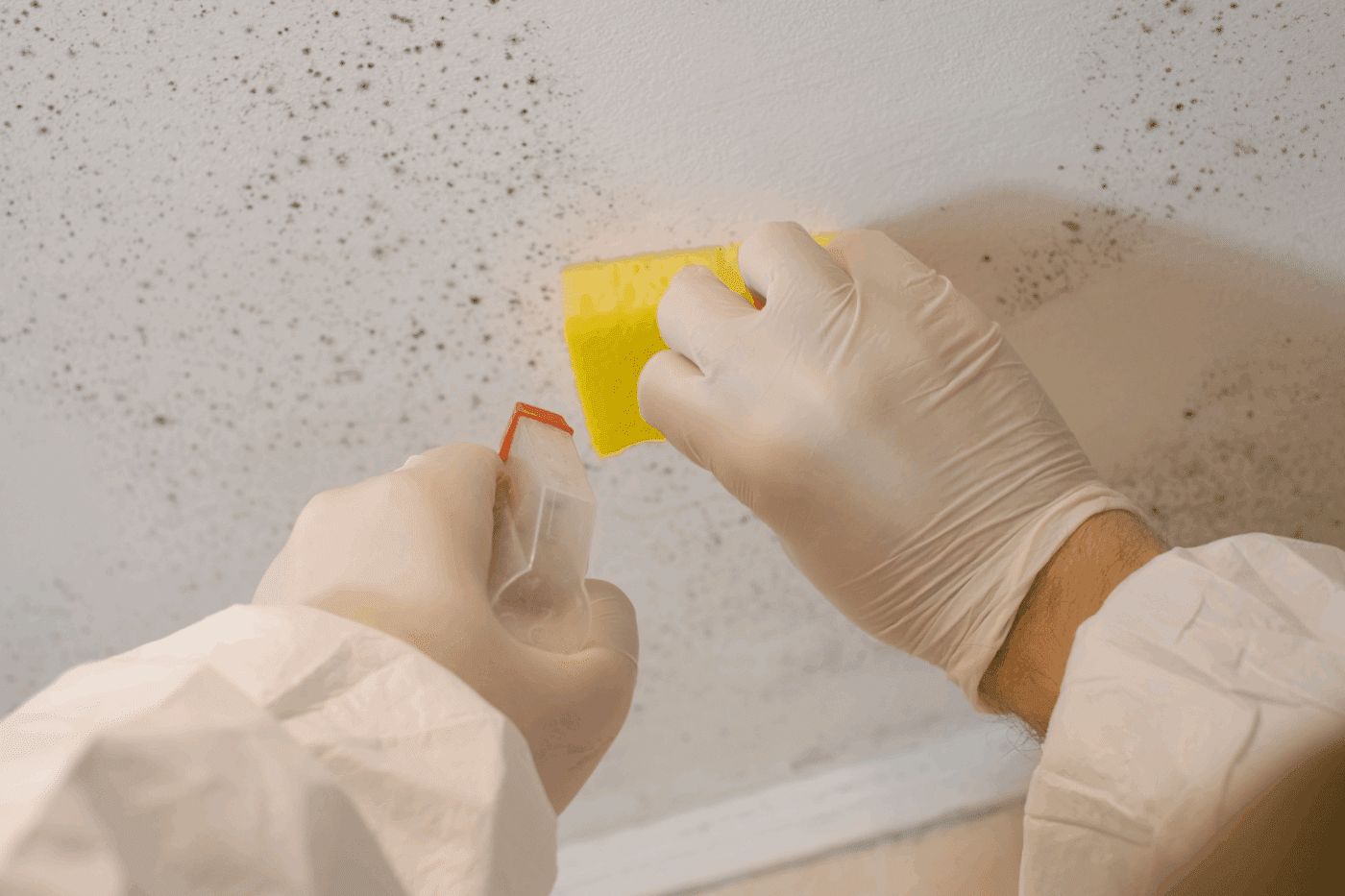
Personal Protection: Wear an N95 respirator mask, unvented goggles, and household rubber or nitrile gloves to avoid breathing in loosened spores.
-
Wash with Mild Detergent: Scrub the affected hard surface with warm water and a basic unscented detergent or dish soap. Detergent breaks surface tension and physically lifts the fungal hyphae from the substrate.
-
Avoid Overusing Bleach on Porous Materials: Chlorine bleach releases harsh fumes, and its water base can soak into porous wood or drywall, potentially feeding residual growth deeper inside once the surface chlorine evaporates. Mild detergents or EPA-registered botanical fungicides are more effective for general household surfaces.
-
Dry Completely: Run a high-velocity fan directly across the cleaned surface for several hours to remove all remaining surface dampness.
Handling Porous Materials (Drywall, Carpet, Insulation)
Porous items that have absorbed water for more than 24 to 48 hours cannot be reliably scrubbed clean once mold infiltrates the internal structure.
-
Saturated Drywall: Cut out and discard water-damaged drywall at least 12 inches above the visible water mark.
-
Moldy Carpet Underlay: Discard and replace the compromised foam padding and clean or replace the subfloor.
-
Cardboard and Paper: Discard old, damp storage boxes; transfer contents into clean, heavy-duty polypropylene plastic bins.
4. Preventing Musty Smells from Returning
Once the source is removed and surfaces are dry, adjust the room’s environmental controls so mold spores cannot colonize again.
+--------------------------+-----------------------+---------------------------------------------+
| Factor                   | Target Range          | Corrective Action                           |
+--------------------------+-----------------------+---------------------------------------------+
| Relative Humidity (RH)   | 30% to 50%            | Run a dedicated dehumidifier if RH > 50%    |
+--------------------------+-----------------------+---------------------------------------------+
| Air Circulation          | Continuous gentle flow| Keep doors cracked; leave 3–4 inches behind |
|                          |                       | furniture on outside walls                  |
+--------------------------+-----------------------+---------------------------------------------+
| Surface Condensation     | Zero visible droplets | Insulate cold pipes; boost ventilation      |
+--------------------------+-----------------------+---------------------------------------------+
-
Monitor with a Digital Hygrometer: Purchase an inexpensive digital humidity sensor. Maintain indoor relative humidity below 50%. If room levels consistently exceed 55% or 60%, run a properly sized residential dehumidifier.
-
Clear the Air with HEPA Filtration: Run an air purifier equipped with a true HEPA filter and an activated carbon stage. The HEPA filter captures airborne spores, while the activated carbon bed adsorbs residual gaseous MVOC molecules, neutralizing the lingering smell.
-
Maintain HVAC Drainage: Pour a cup of distilled white vinegar down the primary condensate drain pipe every spring to clear out microbial sludge and keep the drain pan empty.
5. When to Call a Certified Professional
Not all moisture and mold problems are suitable for DIY remediation. Contact a licensed mold remediation contractor or building science specialist if:
-
The affected mold surface area exceeds 10 square feet (roughly a 3-foot by 3-foot section), per EPA guidelines.
-
The musty odor is accompanied by unexplainable respiratory irritation, persistent coughing, or allergy flare-ups among household members.
-
The water intrusion stems from sewer backflow, exterior groundwater flooding, or contaminated water sources.
-
The odor persists despite thorough surface cleaning, pointing to hidden fungal growth deep inside exterior wall cavities, under subfloors, or throughout sealed ductwork.
Frequently Asked Questions
Can an empty room smell musty without any visible mold?
Yes. Stagnant air, high humidity, and dust accumulation on surfaces can produce a stale, earthy odor even when visible mold colonies have not yet formed on walls. In addition, mold often grows completely out of sight—inside wall cavities, underneath floorboards, or behind baseboards.
Does baking soda or activated charcoal permanently get rid of musty smells?
Baking soda and activated charcoal are natural odor absorbers that capture airborne volatile organic compounds. However, they are passive solutions. If the primary moisture source (such as an under-sink leak, foundation dampness, or high indoor humidity) is not resolved, the musty odor will overpower the charcoal within days.
Is a musty smell always harmful to breathe?
A musty smell indicates the presence of microbial volatile organic compounds (MVOCs) and active fungal metabolism. While brief exposure to mild odors is generally not immediately dangerous for healthy adults, prolonged exposure can trigger headaches, nasal congestion, eye irritation, and asthma symptoms, particularly in children, older adults, or individuals with respiratory sensitivities.
Why does a room smell mustier after running the heat or air conditioning?
If the smell intensifies when your heating or cooling system switches on, the source is likely inside the HVAC unit itself.