How virtual reality is revolutionizing language learning
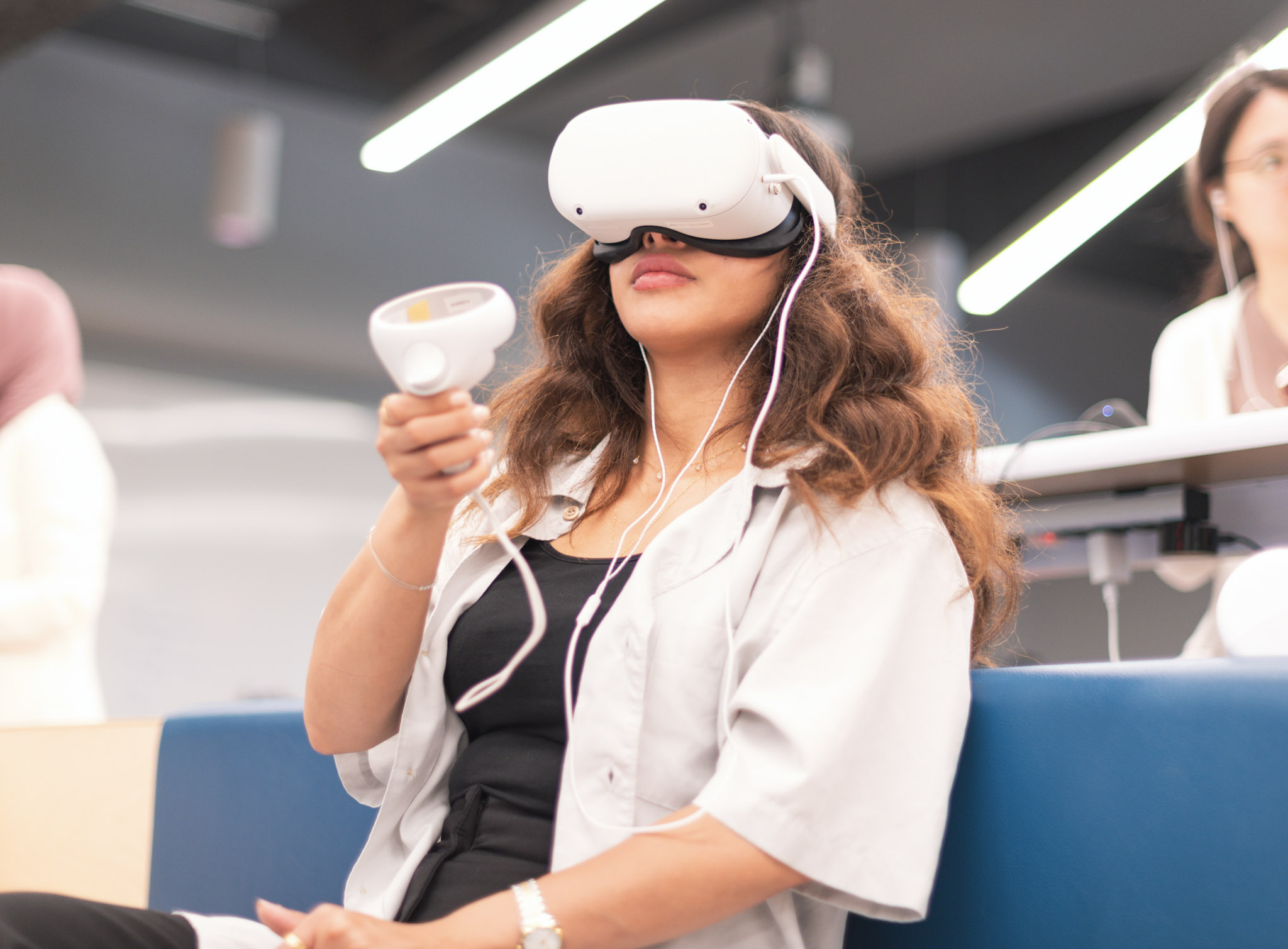
Introduction to virtual reality in language learning
Virtual reality. This technology makes it possible to create immersive and interactive environments, thus offering new possibilities for teaching and practicing foreign languages. In this article, we will explore how virtual reality is transforming language learning, the applications and software available for language learning in VR, as well as the challenges and prospects of this technology in language teaching.
The concept of virtual reality was born in the 1960s, but it is only recently that technological advances have made it possible to develop affordable VR devices and applications accessible to the general public. Today, virtual reality is used in various sectors, such as video games, healthcare, architecture, and, of course, education. More specifically, virtual reality has the potential to create a more engaging, motivating, and effective language learning environment.
The immersive experience of virtual reality
One of the main characteristics of virtual reality is its ability to immerse the user in a virtual environment. This immersion, which can be visual, auditory, and even tactile, creates a more natural and authentic language learning experience. Indeed, virtual reality can simulate real-life, contextual situations in which learners can practice the target language in a more concrete and meaningful way. Virtual reality immersion also promotes the acquisition of communicative skills, allowing learners to practice speaking and understanding the language in a social context. For example, a user can participate in a virtual conversation with native speakers, practice giving directions in a foreign city, or participate in business meetings in a foreign language. These immersive experiences help to boost learners’ self-confidence and motivation, while promoting the acquisition of language skills in realistic situations. Furthermore, virtual reality offers the possibility of adapting to the individual needs of learners by offering personalized scenarios and activities. Thanks to artificial intelligence and progress tracking algorithms, VR applications can analyze learner performance and adapt content accordingly, thus offering a customized learning path.
Advantages of using virtual reality for language learning
Adopting virtual reality in language learning offers numerous advantages. First, VR provides a more engaging and motivating learning experience, allowing learners to immerse themselves in realistic environments and situations. This immersion can help overcome the emotional barrier that can hinder language learning by creating a safe and fun environment for language practice . Furthermore, virtual reality promotes the acquisition of communicative skills by offering scenarios and interactive activities that emphasize comprehension and oral expression. This communicative approach is particularly effective for language learning, as it allows language skills to be developed in context, rather than focusing solely on grammar and vocabulary. Finally, virtual reality offers the possibility of personalized and adaptive learning, taking into account the individual needs and progress of learners. This approach optimizes the time and effort devoted to learning by offering targeted activities and exercises for each learner.
Virtual reality language learning applications and software
Numerous virtual reality applications and platforms are now available for language learning. Among the most popular is Mondly, an app that offers VR language courses for about thirty different languages. Mondly uses virtual reality to create realistic and interactive situations in which learners can practice listening and speaking skills by conversing with virtual characters. Another example is Immerse, a virtual reality language learning platform designed specifically for businesses. Immerse offers business English training, using virtual reality to simulate professional situations such as meetings, presentations, or negotiations . Learners can thus develop their language skills in an authentic professional context. Other applications, such as FluentWorlds or Busuu, combine virtual reality with online learning and social networks to create collaborative and interactive learning environments. Learners can explore virtual worlds, participate in language activities, and communicate with other users in a foreign language, all in an immersive and fun environment.
Integration of virtual reality into language courses
Virtual reality can also be integrated into traditional language courses as a complement to classic teaching methods. For example, teachers can use VR devices, such as Oculus Rift or HTC Vive headsets, to offer immersive and interactive classroom activities. These activities can include virtual tours of foreign countries, virtual reality role-playing games, or conversation exercises with native speakers. Integrating virtual reality into language courses offers several advantages. First, it can help boost student motivation and engagement by offering more varied and stimulating learning experiences. Furthermore, virtual reality allows for an emphasis on communication and interaction, providing opportunities to practice the language in context. However, integrating virtual reality into language courses can also raise challenges, such as the cost of VR devices or the need to train teachers in the use of this technology. Therefore, it is important to consider best practices for integrating virtual reality into language teaching, taking into account the needs and resources of each institution.
VR and cultural immersion
Beyond language learning, virtual reality also offers opportunities for cultural immersion . Indeed, VR can allow learners to discover and explore foreign places, traditions, and ways of life without leaving their classroom. This cultural immersion can help develop learners’ intercultural understanding and sensitivity—essential skills for successful communication in a foreign language. Applications like Google Earth VR, fr example, allow users to travel virtually around the world, exploring iconic landmarks and discovering local cultures. Similarly, VR applications can simulate cultural experiences, such as festivals, ceremonies, or sporting events, thus offering learners an immersive and authentic experience of foreign cultures. Cultural immersion in virtual reality can also help to boost learner motivation by offering richer and more varied learning experiences . Furthermore, this cultural immersion can help contextualize language learning, showing learners how language and culture are interdependent.
Case studies
There are many success stories of using virtual reality in language learning. For example, the University of California, Los Angeles (UCLA) recently launched a VR project for learning Spanish . The program uses virtual environments to immerse learners in real-life situations, such as shopping at the market or conversing with native speakers. The results showed that learners who used VR performed better than those who took traditional classes. Similarly, Newcastle University in the UK has used this new technology to help medical students improve their foreign language communication skills . Students used VR headsets to simulate a medical situation,i interacting with virtual patients in a foreign language. The results showed that the use of VR helped to improve students’ self-confidence and language skills. Finally, the Mondly app, mentioned earlier, won the award for best educational app at the Mobile Premier Awards in 2018. This app uses virtual reality to create immersive and interactive learning environments, thus offering a more engaging and effective learning experience.
Overcoming the challenges of implementing virtual reality for language learning
Implementing virtual reality for language learning can present challenges, such as the cost of VR devices, the need to train teachers in the use of the technology, or compatibility issues with existing computer systems . However, these challenges can be overcome through careful planning and close collaboration between teachers, software developers, and education administrators. It is also important to consider the individual needs of learners, offering customized activities and scenarios to meet their interests and skill levels. Furthermore, it is essential to measure the effectiveness of using VR for language learning by evaluating learning outcomes and collecting feedback from learners and teachers.
The future of virtual reality in language teaching
This new technology offers numerous possibilities for teaching and practicing foreign languages. As technology continues to evolve, new VR devices and applications will likely be developed to meet the needs of learners and teachers. Furthermore, virtual reality can be combined with other emerging technologies, such as augmented reality or artificial intelligence, to deliver even more innovative and personalized learning experiences . However, it is important to emphasize that virtual reality will never replace traditional language teaching. Technology can be a valuable tool to support and enrich learning, but it cannot replace human interaction and personalized teaching. Therefore, it is essential to find a balance between traditional teaching methods and new technologies, using them as a complement to existing teaching practices .
Post Comment