Virtual reality and medicine Innovations that are transforming the healthcare sector
Introduction to Virtual Reality and Medicine
In this article, we will explore the different ways in which virtual reality and medicine intersect, the benefits it offers to healthcare professionals and patients, and the challenges that remain. Virtual reality (VR) is a technology that allows a user to be immersed in a virtual environment, often using a viewing headset and controllers. Since its inception, virtual reality has been the subject of experimentation and applications in various fields, including video games, architecture, education, and vocational training. One particularly interesting area where virtual reality is making waves is medicine.
The evolution of virtual reality in the healthcare field
It is fascinating to see how virtual reality has evolved in the healthcare field over the years. In the 1990s, the first VR applications in medicine were primarily focused on training and simulation. Surgeons and anesthesiologists used VR to simulate complex procedures and situations in order to prepare for real interventions. At the time, the technology was still very new and limited, and virtual environments were nowhere near as realistic as they are today. Over time, virtual reality has gained popularity and become more affordable, allowing its use to expand into other aspects of medicine. Today, VR is used not only for training and simulation, but also for pain management, rehabilitation, mental health management, and even home care. Researchers are also continuing to explore new ways to integrate virtual reality and medicine to improve the quality of care and the effectiveness of treatments.
The benefits of virtual reality for healthcare professionals and patients
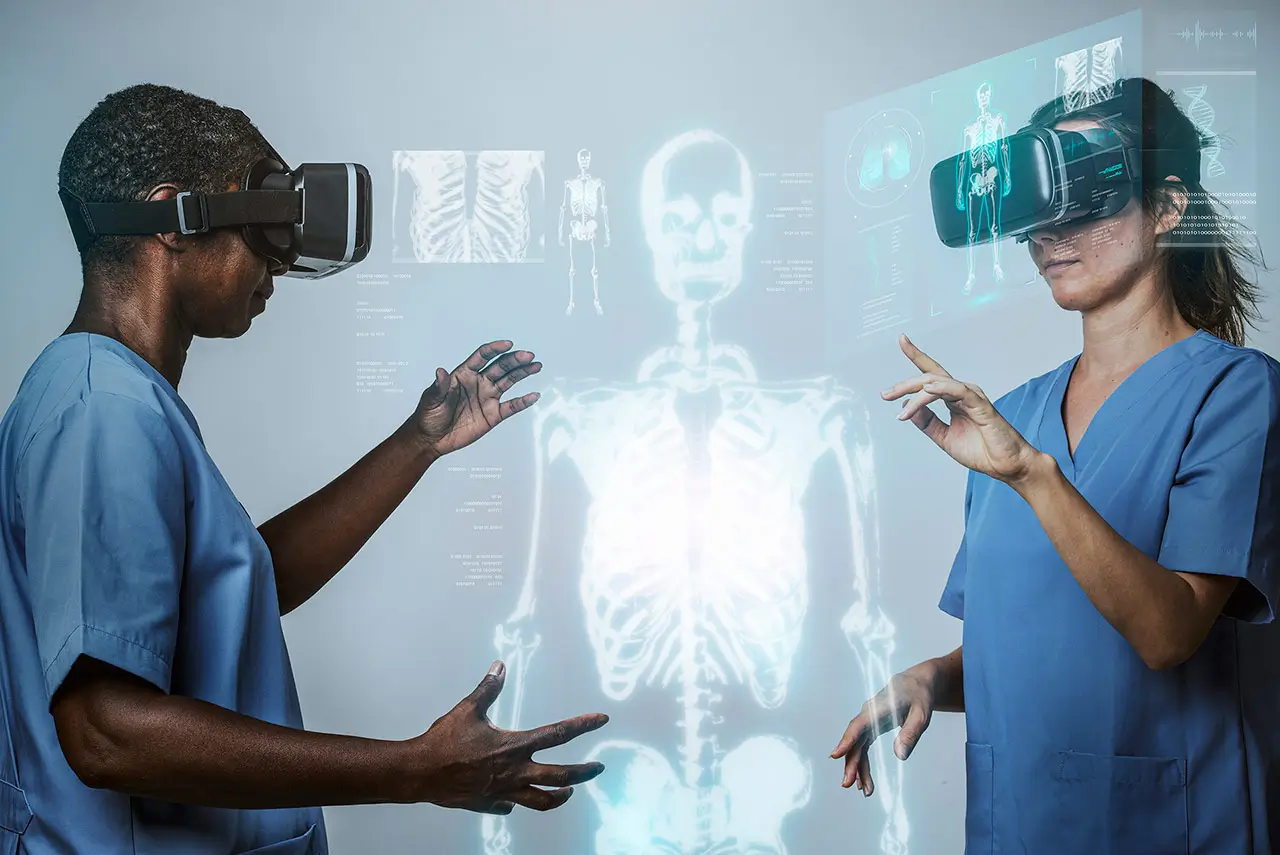
One of the main advantages of virtual reality in healthcare is that it offers healthcare professionals a safe and controlled way to train and improve their skills. Thanks to virtual reality, doctors, nurses, and other healthcare professionals can practice procedures and techniques before applying them to real patients. This not only reduces medical errors but also builds confidence and competence. Furthermore, virtual reality allows patients to better understand their health condition and treatment. Doctors can use virtual environments to help patients visualize their anatomy, as well as the procedures and treatments offered to them. This can help reduce anxiety and improve communication between patients and healthcare professionals. Finally, virtual reality can help improve access to healthcare, particularly for people living in remote or underserved areas. Thanks to telemedicine and virtual consultations, patients can receive medical advice and treatment without having to travel long distances.
Virtual reality and medical education
Medical education is one of the areas where virtual reality has the greatest impact. Medical students can now benefit from practical and realistic training without having to practice on real patients or cadavers. VR also allows students to repeat procedures and situations as many times as necessary, which reinforces their learning and competence. In addition, virtual reality offers students the opportunity to practice working in teams and to develop their communication skills. In a virtual environment, students can practice simulation scenarios with other members of the healthcare team, learning to collaborate effectively and make quick, informed decisions. Finally, virtual reality can also be used to teach stress management and decision-making skills in emergencies. Students can be confronted with virtual crisis scenarios, which prepare them to deal with real and unforeseen situations.ns
Virtual reality in surgical and procedural training
Surgical and procedural training is another area where virtual reality has a significant impact. With VR, surgeons and other healthcare professionals can practice complex and delicate procedures without risking patients. Virtual reality simulators offer a realistic and immersive environment that allows practitioners to familiarize themselves with specific instruments, techniques, and procedures. In addition, virtual reality allows for the development of the dexterity and precision necessary to perform surgical procedures.VR controllers allow users to manipulate virtual objects with high precision, which is essential for a successful surgical procedure. Finally, virtual reality can also be used for continuing education for healthcare professionals. Surgeons and other practitioners can stay up-to-date on the latest techniques and technologies by regularly practicing virtual reality simulations.
Virtual reality for pain management and rehabilitation
Virtual reality is also used to manage pain and aid in patient rehabilitation. Virtual environments can be used to distract patients from their pain, immersing them in relaxinsoothing experiences. Researchers have found that virtual reality can be particularly effective in managing chronic pain, post-operative pain, and pain associated with burns. Furthermore, virtual reality can be used to help patients recover after an injury or surgery. Rehabilitation exercises can be adapted and personalized to each patient’s specific needs, and progress can be tracked and adjusted in real time. Virtual reality can also be used to motivate patients to follow their rehabilitation program and engage in their healing process.
Treating mental health through virtual reality
Virtual reality also offers new opportunities for mental health treatment. Therapists can use virtual environments to help patients cope with stressful situations or overcome phobias and anxiety disorders. For example, virtual reality can be used to help patients with post-traumatic stress disorder (PTSD) relive traumatic experiences in a controlled and safe environment, which may help reduce symptoms. Similarly, virtual reality can be used to help patients with autism spectrum disorder (ASD) learn social skills and adapt to complex social situations. Therapists can use virtual environments to simulate social interactions and help patients develop communication and social interaction skills. Finally, virtual reality can also be used to treat depression and anxiety. Researchers have found that virtual reality can help patients relax and reduce their anxiety by immersing them in calm and soothing environments.
Future innovations in virtual reality and medicine
As virtual reality continues to evolve, it’s exciting to consider future innovations that could further transform the healthcare industry. New applications of virtual reality could include more accurate diagnoses, more precise surgical interventions, and more effective therapies for patients. Furthermore, virtual reality could also be used to help patients manage their own health. Patients could use virtual environments to track their treatment, learn health management skills, and monitor their mental and physical well-being. Finally, virtual reality could also be used to simulate epidemics and pandemics, helping healthcare professionals prepare for emergencies. Virtual reality simulations could help predict disease spread patterns and plan interventions accordingly.
The challenges and limitations of virtual reality in the healthcare field
While virtual reality offers numerous benefits for medicine, there are also challenges and limitations to its use. One of the main challenges is the high cost of the technology, which can make VR inaccessible to many healthcare professionals and patients. Furthermore, virtual reality can be difficult to integrate into existing healthcare systems due to the complexity of the technology and compatibility issues with other computer systems. Finally, it is important to recognize that virtual reality cannot completely replace human interaction in healthcare. Although VR can be used to improve training and communication between healthcare professionals and patients, it cannot replace the empathy and compassion that are essential to many aspects of healthcare.
Conclusion: The transformative impact of virtual reality on the healthcare industry
Overall, virtual reality has the potential to significantly transform the healthcare industry. From surgical training and pain management to rehabilitation and mental health, VR offers significant benefits for both healthcare professionals and patients. Although challenges remain, it is clear that virtual reality will continue to evolve and expand in the field of medicine. Ultimately, the key to success will be finding a balance between technology and human interaction to provide high-quality, patient-centered healthcare.
Post Comment